
Manufacturing
Cast acrylic.
Custom fabrication.
Material production, design development, machining and finishing for project-specific acrylic components.
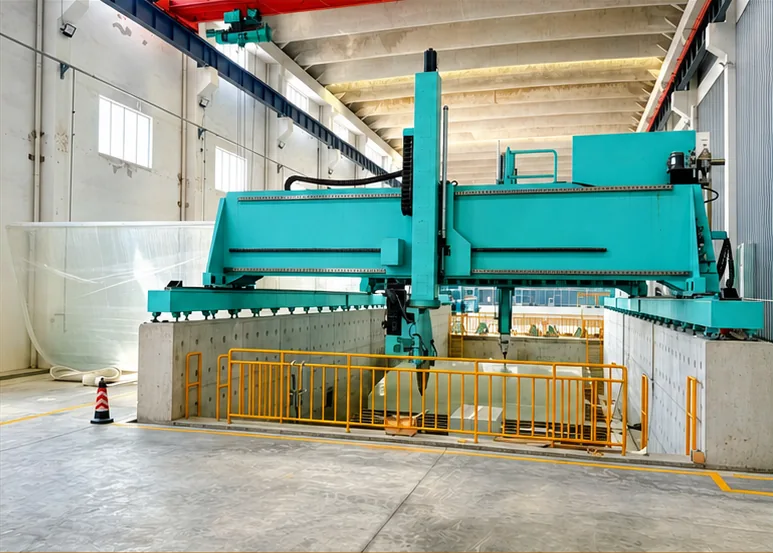
The production process
From MMA material preparation to optical inspection and packing.
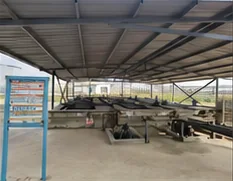
01 · MMA storage
Raw material storage
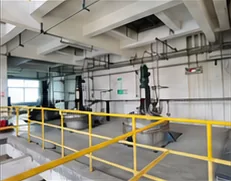
02 · Raw material preparation
Preparation for polymerization
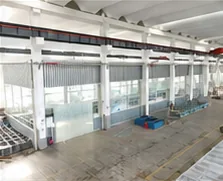
03 · Panel polymerization
Cast acrylic panel production
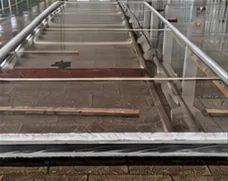
04 · Panel inspection
Inspection after panel production
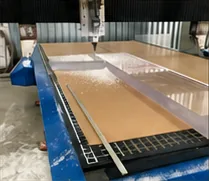
05 · Milling
Surface and thickness processing
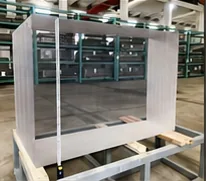
06 · Thickness build-up
Fabrication of thicker acrylic assemblies
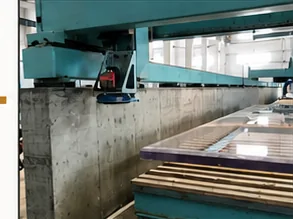
07 · CNC machining
Profiles and fabrication interfaces
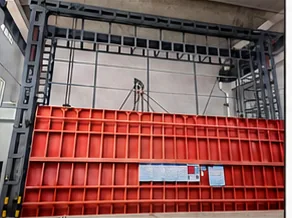
08 · Thermal forming & annealing
Thermal processing for shape and fabrication
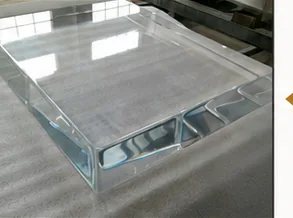
09 · Bevelling & polishing
Edge and surface finishing
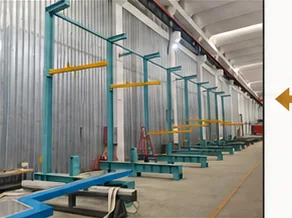
10 · Optical inspection
Viewing-surface inspection
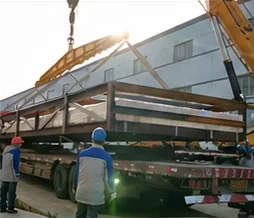
11 · Packing
Protection for handling and transport
Design development
and CNC processing
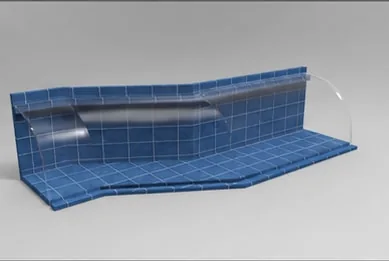
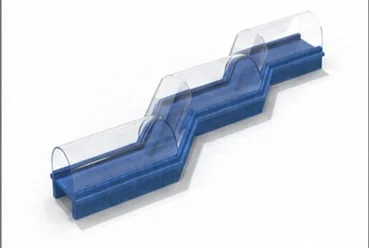
Geometry models support the discussion of component shape, joints and fabrication details.
CNC equipment
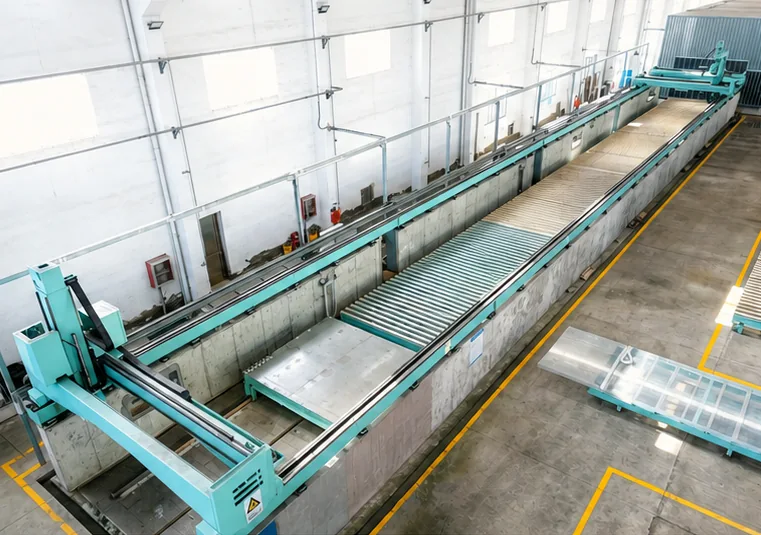
The production equipment includes two five-axis machining centers, two four-axis cutting machines and two three-axis machining centers.
Large machining center
The large machining center is listed at 27 m in length and 7 m in width. Component geometry, tooling and the usable processing arrangement are reviewed for each fabrication job.
Bonding, forming
and finishing
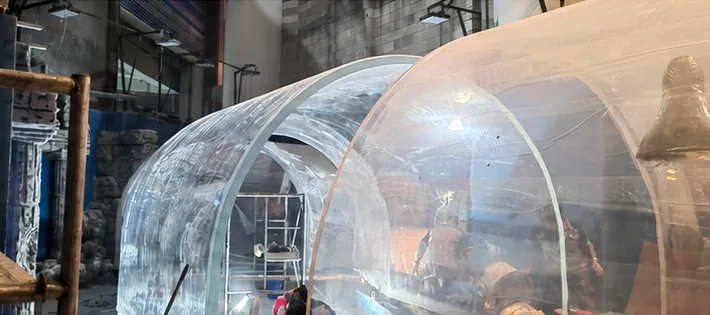
Curved panels and multi-section assemblies combine fabrication, bonding, annealing and surface polishing.
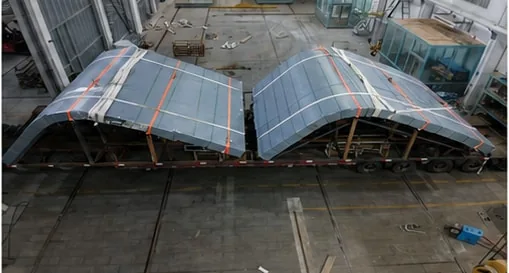
Joined acrylic assemblies
Fabrication can combine multiple acrylic sections into the form needed for a viewing window or passage. Joint geometry and processing are developed with the project.
Annealing & polishing
Thermal processing and polishing are part of the fabrication sequence, alongside optical inspection and surface finishing.
Stair tunnel
A four-section stair tunnel example, shown during installation and after filling.
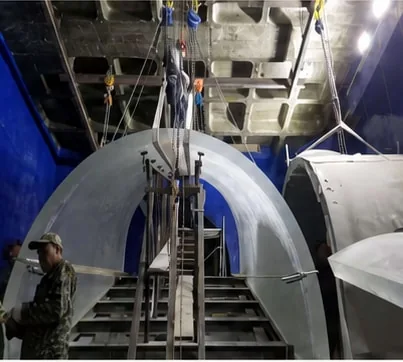
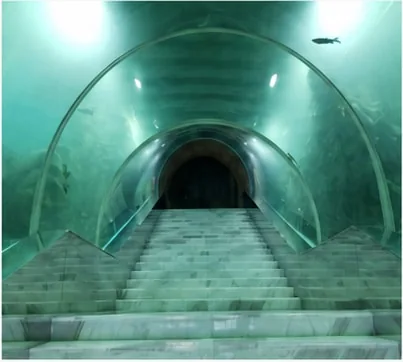
Dimensions of the illustrated example
| Dimensions | Reference |
|---|---|
| 21,500 mm | Length |
| 3,300 mm | Width |
| 2,100 mm | Height |
| 120 / 130 mm | Acrylic thickness |
Dimensions shown apply to this specific example. Each new project requires its own geometry, support and loading review.
Corner tunnel
A four-section tunnel with a turn in the visitor route, shown during fabrication and in use.
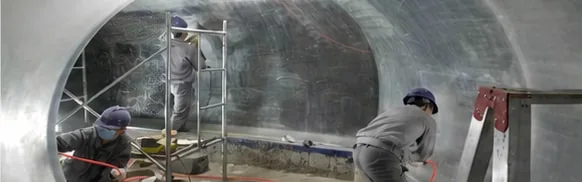
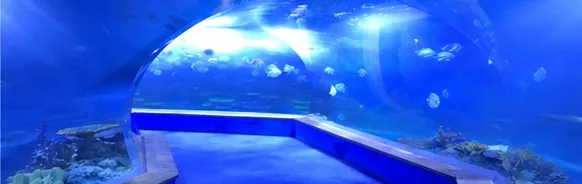
Dimensions of the illustrated example
| Dimensions | Reference |
|---|---|
| 19,000 mm | Length |
| 3,200 mm | Width |
| 2,200 mm | Height |
| 100 mm | Acrylic thickness |
Dimensions shown apply to this specific example. Each new project requires its own geometry, support and loading review.
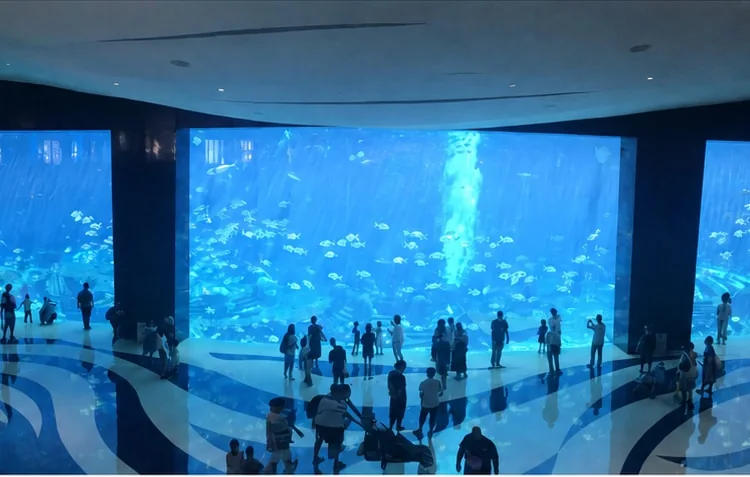
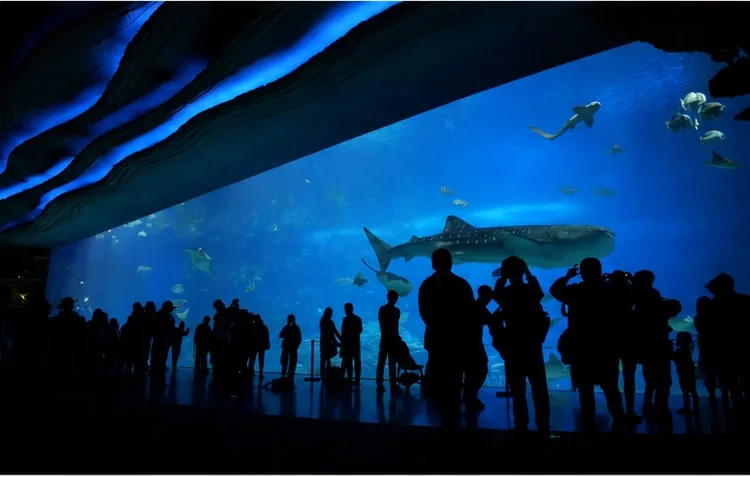
Large viewing windows
Large window examples illustrate on-site bonding and annealing of acrylic assemblies.
Dimensions of the illustrated example
| Dimensions | Reference |
|---|---|
| 16,000 × 8,000 × 550 mm | Listed window example · L × W × T |
| 38,000 × 8,300 × 650 mm | Listed window example · L × W × T |
Dimensions shown apply to this specific example. Each new project requires its own geometry, support and loading review.
Handling frames,
supports and installation
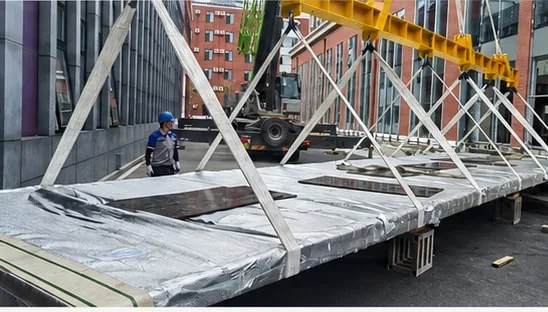
Steelwork interfaces, transport protection, lifting access and site alignment are considered alongside the acrylic component.
Transport & access
Framed handling arrangements protect large and curved acrylic components during loading, transport and positioning.
Site interfaces
Opening dimensions, bearing surfaces, rebates and support frames need coordinated details before installation begins.
Technical & Installation PrinciplesDiscuss Your Acrylic Project
Share your drawings and requirements with our team.
- Opening dimensions
- Water depth
- Support details
- Project location